


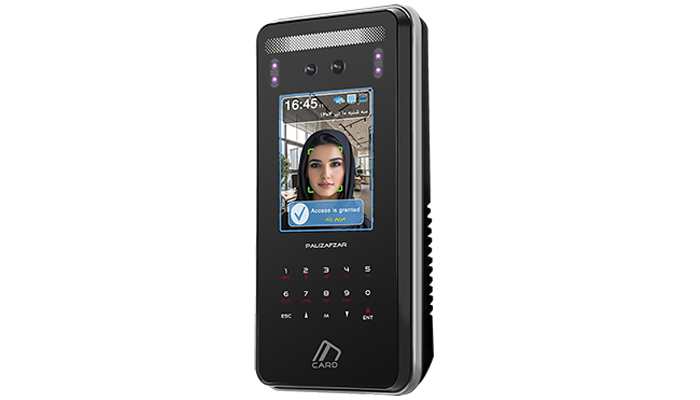






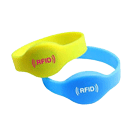




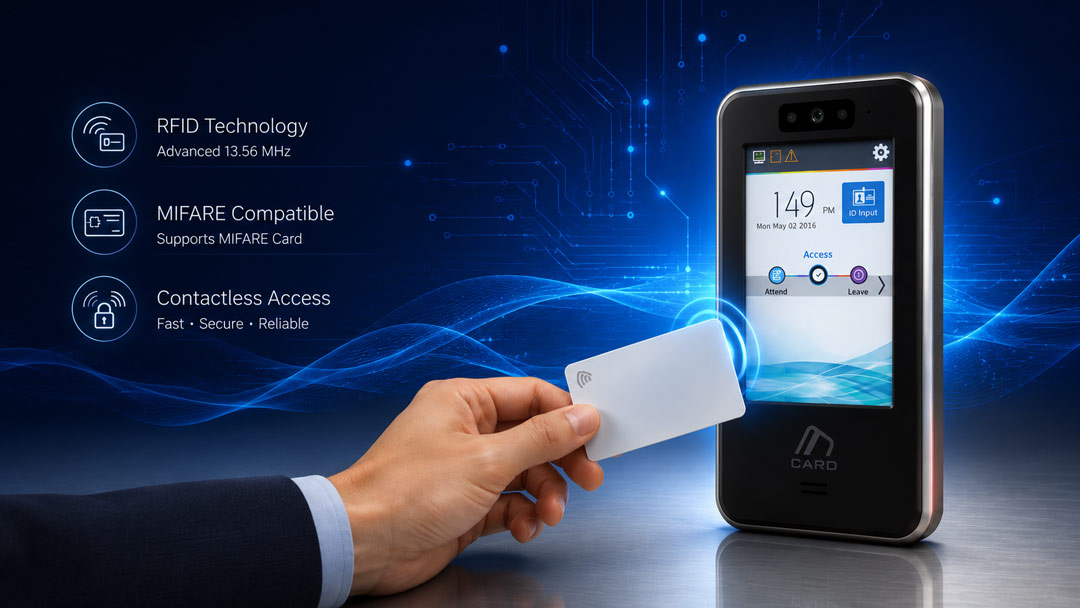
One of the most common and cost-effective ways to record employee attendance is the card-based attendance device. These devices use contactless cards such as RFID, Mifare, and NFC to identify staff in a fraction of a second and log their check-in and check-out times. Thanks to their speed, lower cost compared to biometric systems, and ease of use, time and attendance devices based on cards remain one of the most widely used choices for companies, schools, factories, and other high-traffic environments. In this comprehensive guide, you'll learn how they work, the types of cards available, their advantages and limitations, security considerations, how they compare with other biometric technologies, and what to look for before buying.
Quick definition: A card-based attendance device is a system that identifies users through a contactless card (RFID or Mifare) by reading its unique serial number, and logs the exact time of check-in, check-out, and other attendance events.
What you'll learn in this guide
What is a card-based attendance device?
A card-based attendance device identifies a user by reading a contactless card and matching the unique serial number or code stored on it. Staff simply hold their card near the device's sensor, and their check-in or check-out is recorded in under a second. Unlike a fingerprint attendance device, which reads a person's physical characteristics, a card-based device only identifies the card — not the individual holding it.
Which organizations use card-based attendance devices?
Because of their lower cost and high speed, card-based devices are especially popular in organizations with large headcounts and high foot traffic, such as factories, healthcare facilities, schools, and universities. In many organizations, these devices also serve as part of an access control system — meaning the same card is used both to log attendance and to open doors.
How does a card-based attendance device work?
Every contactless card contains a chip and an antenna storing a unique identifier (UID). When the card comes within a few centimeters of the device's reader, an electromagnetic field is generated and the card number is read wirelessly.
The overall process can be summarized as follows:
Card ↓ Reader ↓ Card number captured ↓ Sent to software
In the final step, the captured number is matched against the device's database or attendance software; if it matches, the person's identity is confirmed and the exact time of the event is recorded — the whole process typically takes less than a second. To learn more about the underlying technology, read our article on RFID technology.
Advantages of card-based attendance devices
- High speed: Card recognition typically takes less than a second, so even during peak entry hours there's no long queue at the door.
- Ease of use: The card just needs to be held near the sensor — no need to press a finger or stand in front of a camera, which also makes it accessible for people with certain physical limitations.
- Lower cost: Both the device itself and each individual card are typically cheaper than facial-recognition or fingerprint biometric devices.
- Well suited to high-traffic environments: In organizations with shift work and large headcounts, card-based logging speeds up the flow of people through entry points.
- Can be combined with access control: The same card can also be used to access doors, parking lots, and elevators.
- Not dependent on physical condition: Unlike fingerprints, which can fail to read due to cuts, moisture, or dry skin, a card is read the same way every time.
Limitations and drawbacks of card-based attendance devices
- Cards can be lost or forgotten: If a card is left at home or lost, the employee can't log attendance until they receive a replacement or temporary card.
- Cards can be handed to someone else: The biggest risk of this technology is that one employee can give their card to a colleague to clock in on their behalf ("buddy punching") — something that's practically impossible with biometric devices.
- Lower security than biometrics: Older card types such as EM are vulnerable to cloning if not properly encrypted (see the security section for details).
- Replacement costs: In large organizations, the ongoing cost of issuing new cards — for new hires or lost cards — needs to be factored in over time.
For this reason, many organizations that require higher identity accuracy opt for multi-factor devices, introduced below.
Types of card-based attendance devices
RFID card-based devices
The most common type of card-based device runs on RFID (Radio Frequency Identification) technology. These devices typically operate at 125 kHz and, thanks to their affordable price, are used across a wide range of organizations. To fully understand this technology and its role in access-control accuracy, read RFID Technology and RFID's Impact on Access Control Accuracy.
Mifare card-based devices
Mifare cards, operating at 13.56 MHz with built-in encryption, offer a higher level of security than plain RFID cards. Devices equipped with a Mifare reader are typically chosen by organizations that use the same card for physical access control in addition to attendance tracking.
Multi-factor devices (card + fingerprint + face recognition)
To address the main weakness of card-based devices — the ability to hand off a card — many organizations use hybrid devices that support multiple authentication methods at once. In these models, the card provides quick identification while a fingerprint or facial scan confirms identity. Palizafzar offers a range of these hybrid devices, shown in the product range section below.
Types of cards used in attendance devices
The type of card you choose has a direct impact on the security and performance of your attendance system. The table below summarizes the most common card types; for a full breakdown of each technology, read Contactless Cards.
| Card type | Frequency | Encryption | Common use |
|---|---|---|---|
| EM | 125 kHz | None | Simple, budget systems |
| Mifare | 13.56 MHz | Yes | Standard choice for attendance and access control |
| DESFire | 13.56 MHz | AES (advanced) | High-security organizations |
| NFC | 13.56 MHz | Yes | Card emulation on smartphones |
Applications of card-based attendance devices
Thanks to their affordability and speed, card-based attendance devices are used across a wide range of organizations:
- Private and government offices
- Schools and kindergartens
- Universities and higher-education institutions
- Factories and manufacturing facilities with large workforces
- Gyms and recreational centers
- Clinics, hospitals, and other healthcare facilities
In environments like factories, where staff may have dirty hands or wear gloves, a card-based device delivers more consistent performance than a fingerprint device.
Comparing card-based devices with other technologies
Compared with fingerprint devices
A fingerprint attendance device has the edge in identity security; a card-based device has the edge in speed and convenience for workers with dirty hands or gloves.
Compared with facial recognition devices
A facial recognition attendance device requires no physical contact and suits hygiene-conscious environments, but its upfront cost is usually higher than a purely card-based device.
Compared with iris recognition
Iris recognition offers the highest accuracy among biometric methods and is typically only cost-justified for high-security facilities.
| Criteria | Card | Fingerprint | Facial recognition |
|---|---|---|---|
| Security | Medium | High | High |
| Speed | Very high | High | High |
| Cost | Budget-friendly | Medium | Medium to high |
| Physical contact | None (near sensor) | Yes | None |
| Risk of fraud | Yes (card sharing) | Very low | Low |
In short: if your priority is speed and low cost, a card-based device is a solid choice. If preventing buddy punching matters more to your organization, combining a card with a biometric method (a multi-factor device) is recommended.
Is a card-based attendance device still a good choice?
Despite the growth of biometric technologies, card-based attendance devices remain a popular choice for many organizations thanks to their low cost, high speed, and simple installation — especially where headcount is high and budgets are tight.
When is a card-based device the best choice? When speed at peak entry times, low cost, and ease of use for staff (including in industrial settings with dirty hands or gloves) are your top priorities.
When is a fingerprint device better? When preventing buddy punching and maximizing identity accuracy matter most to your organization.
When is a facial recognition device better? When, in addition to identity accuracy, avoiding physical contact with the device (for hygiene or user-experience reasons) is also a requirement.
Which organizations is a card-based attendance device suitable for?
- Schools: high capacity, low cost, and fast attendance logging for students and staff
- Universities: managing high-volume traffic from students and staff during set class hours
- Gyms: fast member check-in without a bottleneck at the entrance
- Factories: reliable performance for staff with dirty hands or gloves
- Warehouses: can be combined with access control to manage entry to different warehouse zones
- Private companies: quick installation, low upfront cost, and compatibility with payroll software
Security of card-based attendance devices
Risk of card cloning
Simple, unencrypted cards such as EM can be cloned with inexpensive equipment. This is one of the most significant security weaknesses of older card-based systems.
Encryption
To address this risk, newer standards such as Mifare and DESFire use encryption algorithms to protect card data, making cloning far more difficult.
Mifare
Mifare Classic cards, with their built-in encryption, provide an acceptable level of security for most organizations, which is why they've become the default standard for many attendance and access-control devices.
DESFire
For organizations that need a higher level of security, DESFire cards — with 128-bit AES encryption — are the more reliable option, and are commonly used in banking, government, and security-focused projects.
Bottom line: to reduce security risk, we recommend using encrypted cards (Mifare or DESFire) instead of simple EM cards, especially if the same card is also used for door access control.
Buying guide for card-based attendance devices
Before purchasing a card-based attendance device, reviewing the following points will help you make the right choice:
- Number of staff: The device's card-storage capacity and attendance-log capacity should match your current headcount and expected future growth.
- Card type: Decide whether a simple EM card is sufficient or whether you need an encrypted card (Mifare/DESFire) for added security.
- Software integration: Check whether the device is compatible with your preferred attendance software or your organization's payroll system.
- Network: The device's connection type (LAN, Wi-Fi, or USB) should match your organization's network infrastructure.
- Access control: If you plan to use the same device to open doors or a parking gate, it needs a relay output and the ability to connect to an access control system.
- Need for two-factor authentication: If you need higher security, consider a hybrid card + biometric device.
Price of card-based attendance devices
Card-based attendance devices are generally cheaper than biometric models, but several factors affect the final price:
- Number of users and memory capacity: The higher the card- and log-storage capacity, the higher the device price.
- Supported card type: Devices compatible with encrypted cards (Mifare/DESFire) are usually more expensive than EM-only devices.
- Device features: Features such as a display screen, a relay output for door control, Wi-Fi support, or the ability to combine with biometrics all affect the final price.
For up-to-date pricing and advice tailored to your headcount and organizational needs, contact Palizafzar's specialists. For a general price range across attendance devices, see our attendance device price guide.
Palizafzar's card-based attendance devices
Palizafzar offers a wide range of card-based attendance devices, from single-factor budget models to hybrid devices combining card, fingerprint, and facial recognition. Supporting both RFID and Mifare cards, these devices suit organizations of every size.
Frequently asked questions about card-based attendance devices
1. How does a card-based attendance device work?
When the card is held near the device's sensor, its unique identifier is read; if it matches the database, the person's identity is confirmed and the attendance event is logged.
2. Can an attendance card be cloned?
Simple, unencrypted EM cards are vulnerable to cloning, but Mifare and DESFire cards offer much stronger security thanks to built-in encryption.
3. What's the difference between a card-based and a fingerprint device?
A card-based device is faster and cheaper but a card can be handed to someone else; a fingerprint device offers higher identity security but may see reduced accuracy in industrial environments.
4. Can the same card be used for both attendance and opening doors?
Yes — if the attendance device is connected to an access control system, the same card can also be used for physical access to doors and parking areas.
5. Which card type is better for large organizations?
For large organizations with higher security requirements, Mifare or DESFire cards are recommended due to their stronger encryption.
6. What should be done if an employee's card is lost?
Most attendance software allows you to issue a new card and deactivate the lost one, preventing potential misuse.
7. Can card-based devices be managed remotely?
Yes, many models support network or Wi-Fi connectivity, allowing remote management and access to attendance reports online.
8. Are card-based devices suitable for industrial jobs?
Yes — because there's no direct skin contact required, card-based devices perform more reliably than fingerprint devices in industrial settings where staff may have dirty hands or wear gloves.
9. How can buddy punching be prevented?
Using a multi-factor device that checks a fingerprint or face in addition to the card is the most effective way to prevent this issue.
10. Can an NFC card be used on a smartphone?
Some newer devices support NFC card emulation, letting users tap their phone instead of a physical card.
11. How much does it cost to maintain a card-based attendance device?
Maintenance costs are generally low; the main ongoing expense is issuing new cards for new hires or replacing lost ones.
12. Is a card-based attendance device compatible with payroll software?
Yes, most Palizafzar card-based attendance devices can integrate with common attendance and payroll software.
13. Which card-based attendance device is best for schools?
Schools typically do well with an affordable, Mifare-based device with medium user capacity and simple integration with parent-notification systems; Palizafzar's specialists can recommend the right model based on student numbers.
Conclusion
A card-based attendance device remains one of the most widely used solutions for logging attendance, thanks to its speed, affordability, and ease of use. That said, for organizations where identity accuracy and preventing buddy punching matter most, combining a card with a biometric method such as fingerprint or facial recognition is recommended. Palizafzar's team is ready to review your organization's exact requirements and recommend the most suitable card-based or hybrid device.